Image

Brothers and Sisters, I am grateful for the chance to fellowship with you in the St Stephen’s LC  pulpit on this of morning St. Patrick’s Day 2013. Although I admire and respect St. Patrick for his efforts as a missionary and bishop, I usually do not participate in St. Patrick’s Day parades or celebrations. Although I opt out of the celebratory practices associated with St. Patrick’s Day, I do celebrate my birthday in March. Every year like clockwork, I always find it a bit of an awkward thing to observe a birthday during the Lenten season. Lent consists of prayer, fasting and almsgiving while in my life, birthdays have generally consisted of karaoke, fatty food, and social gatherings with loved ones. On my birthday, I celebrate as much as I can all while still fasting and keeping my Lenten promises since nothing truly compares to Jesus’ birth, life, ministry, as trite as that may sound. Jesus Christ is unapologetically the center of our lives and Lent is the time for us to walk more closely with our Christ and even more importantly prepare our hearts for the Holy sacrifice, death, and resurrection that we continue to wrestle with and reflect on as the body of Christ. Today especially, our readings bring us a gospel story and timely psalm 126 meditation that brings us closer to our Lord and savior as we approach Holy Week and the crucifixion.

Brothers and sisters, in our gospel from the 12th chapter of John, Jesus begins to not only talk about but also prepare for his ultimate mission of dying on the cross. The cross, brothers and sister, is the focal point of our faith and lives today as the former symbol of suffering and shame. Jesus’ crucifixion stands out to us as the gateway to the Paschal Mystery that we still prepare for to this very day; but, back then when Jesus was sitting at that table in Bethany with Martha and Judas sitting around him worrying about money, crucifixion was the very last thought on any of the disciples’ mind. They were so happy to be around Jesus after he had raised Lazarus from the dead that they were eating and liming (as we Guyanese say) until Mary makes a move of God.

Brothers and Sisters, while the men sit and eat the food being served up by Martha, Mary catches the Holy Spirit and brings the most expensive and exquisite perfumed oil to Jesus feet. She breaks open that oil with the strength and insight of a true prayer warrior woman, and even uses her hair to anoint Jesus with this perfumed oil that fills the whole room, drawing attention to Jesus and the value of his presence. The price of that oil that Mary pours on Jesus’ body is so high that Judas denounces Mary’s action as a waste of money! In verse 5 of this gospel reading today, Judas cries ‘Why was this perfume not sold for three hundred denarii and the money given to the poor?’ in other words: Why squander this expensive fragrant oil on lil’ ol’ Jesus?

After a statement like that, Brothers & sisters, it’s clear that Judas believes in the worth of this oil more than the worth of Jesus…and often brothers & sisters, what we believe is the most revealing thing about our lives and actions. While Judas believes in the value of this oil and obsesses over the kind of money that will lure him to betray our savior, Mary takes a leap of faith and believes in that moment how God is doing something awesome in Jesus and that Jesus was worthy to be praised, prayed for and anointed.

Mary wisely ignores that foolishness of Judas and keeps her heart focused on Jesus. She keeps up the faith that Jesus is more precious than any oil or perfume or money that any of them had ever seen or will see and she makes a move of God that actually sets Jesus to be ready for his greatest teaching & miracle of all.

Acknowledging Mary’s act as right and Holy in that moment, Jesus then reveals the breaking news that will change time and creation forever. In verses 7&8, he announces to Judas and all the people in the room and in the world: ‘Leave her alone. She bought the oil so that she might keep it for the day of my burial. 8You always have the poor with you, but you do not always have me.’ in other words Jesus was not going to be with them for much longer to go to the cross.”

Brothers and sisters, Jesus proclaims his imminent death and also uplifts Mary’s holy foresight of setting him up for burial. In anointing Jesus with that oil, Mary actually prepares Jesus for the life-changing death and crucifixion that allows us to die to sin and rise again to new life with the resurrection that follows.

As Mary knew in the spirit, Jesus’ time was short and he was not to live as a man for long. As Mary knew then and we know now, the day of Jesus burial would be a time of weeping and a time of loss that caused people to realize Jesus’ true value once for all. Much more than any oil or perfume or money, Jesus is the precious lamb of God who suffered and then dies to take away all of the sin of the world and turn tears of sadness into tears of joy.

Our Psalm today sings out this very message of redemptive suffering that is possible in God’s plan of salvation when we likewise look at that last verse six of psalm 126: He who goes out weeping, bearing the seed for sowing, shall come home with shouts of joy, bringing his sheaves with him.”

Though there is an appointed season for weeping and death and sadness, GOD surely appointed a time thereafter for Joy and a new state of life once the work of salvation reaches the time of completion. Jesus death was to be that kairos moment when the fulfillment of all of God’s promises was to be laid on the cross. The emotional sadness and mourning of the disciples is part of a larger set of bad feelings that all of us struggle to understand alongside the suffering and killing that God allowed.

But ladies, and gentleman, Jesus was never trying to change the color of our mood rings; but he was striving to change the quality and content of our lives. Jesus was willing to teach and journey with the disciples through all their human struggles and emotions -including sadness. Jesus even volunteered to experience death for each and every person on Earth so that we all could rise with him on Easter to new lives of peace and joy.

Jesus was indeed God’s thermostat to the world, re-setting a new standard of holiness and peace and joy that transcends temporary weeping. As God’s thermostat, Jesus sets a standard of peace & joy that lasts eternally in spite of the sad feelings brought on by the vicissitudes of circumstances. As Psalm 126 states, the seeds of salvation sown with weeping on the day of the crucifixion leads to the joyful reaping of all the saints of every time and every place. We have the right to live into that joy and peace today in spite of the transient changes in our life circumstances that tempt us to feel or believe otherwise. We are too blessed to behave like Judas who acts much more like a thermometer than a thermostat. Judas, was measuring the money and lets Mary’s anointing of Jesus bring him to a place of anger and greed as he measures the circumstances of his life rather than allowing the Holy Spirit to maintain peace in his spirit. If he was like Mary and relied on God’s thermostat to keep him in perfect peace, he would have reacted with joy at the revelation of how precious and short Jesus’ life was to the Glory of God. Brothers and sisters, we are to be a lot less like Judas and a lot more like Mary by keeping our minds and hearts fixed on Jesus until our own spirit is like a thermostat consistently set on the peace and joy that God promises.

As Isaiah 43:19 states God is “doing a new thing” in creation that we can watch Spring forth out of our hearts and lives as the Body of Christ on Earth. Like Mary, we can stop dwelling on things that we seem lose and instead keep our eyes and ears open for all the new things that God is doing and open ourselves to new opportunities to grow and show our spirits of joy and peace to others.

as children of God, our spiritual birthday is the day that Jesus died that we re-enact during our baptisms.

Jesus’ suffering and death remains redemptive since it is our window to life and life more abundantly in God and the community of saints..

Because of Jesus we can open our mouth and proclaim joyful songs of praise. Because of Jesus, we can open our new spiritual ears and let God’s word and the Holy Spirit of peace penetrate our hearts, minds and bodies.

Because of Jesus we can and WILL be a lot more like Mary and a lot less like Judas and God can help us to keep our spiritual eyes fixed on God as our source of divine knowledge and wisdom. Because of Jesus, we can do God’s will and fulfill the purposes of our lives and have power over sin, the world and evil that Jesus’ precious blood brought for us at Calvary.

Brothers and sisters, we can do all things through Christ who strengthens us since Jesus has a value that far exceeds that of the most expensive of oils and he is worthy to be praised. Let us embrace the value of his death and resurrection in particular as the price paid for our spiritual thermostat set to peace and joy for all the days of our lives. Walk in God’s peace and joy throughout the rest of this Lenten season and always and forever more.

in the name of the Father and the Son and the Holy Spirit.

AMEN

“Dear Land of Guyana of Rivers and Plains

Made rich by the sunshine and lush by the rains” -“Green Land of Guyana” National Anthem

(pic of Kaiteur falls)

Ms. Parris here and this next entry is a Labor-day/West-Indian Day Parade inspired post that features the aspects of Guyana that can engender feelings of pride. Jumping right on the bandwagon with tourists who hail Guyana as a bird-watching paradise, the Guyanese landscape in of itself is a  top selling point with many items that are boast-worthy. Known as the “land of many waters,” Kaiteur Falls (depicted above) in particular stands as the impressive largest single-drop waterfall in the world.

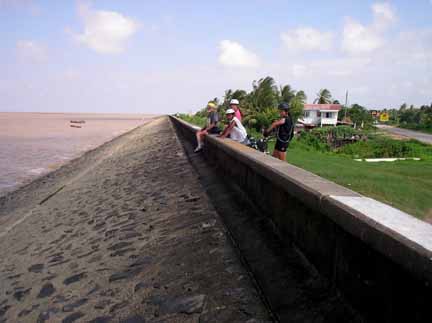
Moreover, the Sea Wall is quite popular as a hangout spot and protective barrier lining the  Atlantic Coast of Guyana since the country is actually below sea-level.

(seawall)

On Sundays in particular, lots of people party on the seawall overlooking the water while enjoying lots of music, company and snacks… Apparently; my brother “Boo,” could not sleep when he was baby without getting rolled across the wall for a bit in his stroller so  the seawall also boasts lots of relaxation power in the sea air surrounding it.

Another attraction related to water that is talked up a great deal by some Guyanese people is the Splashmin Water Park and Eco-resort.

(Splashmin pic of Glorie, Volleyball court & black water)

One of the most fascinating aspects of Splashmin is the “black water” swimming and boating area where visitors can jet-ski or ride motorboats to the eco-park.

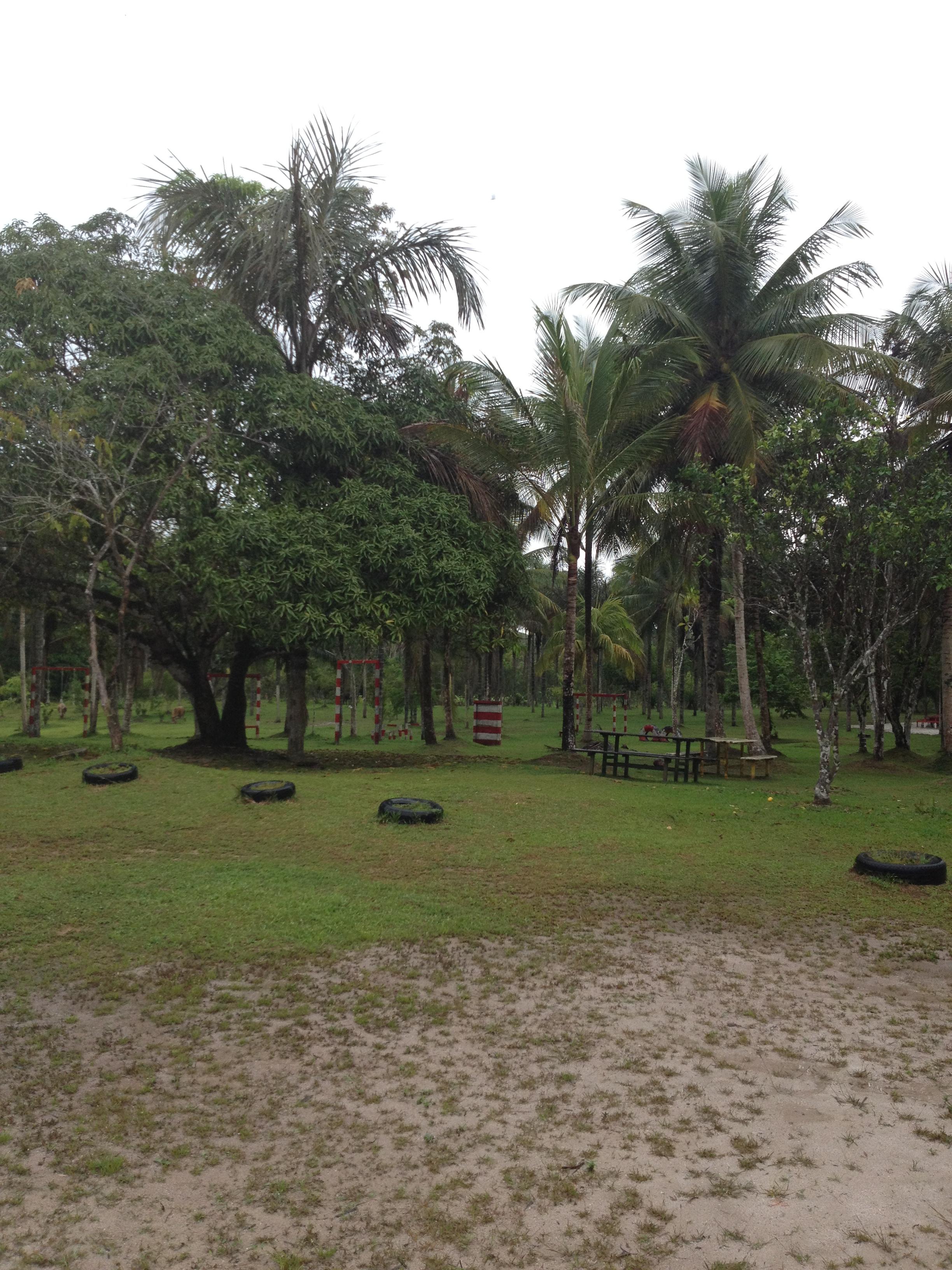
(Obstacle course in the Eco-park)

The eco-park has lots of lush vegetation that include but are certainly not limited to mango trees and an obstacle course complete with walls to climb, tires to jump through and enough rope activities to inspire fitness plans across the world. This park and practically every region in Guyana is super lush and boast-worthy for its ability to nurture a smorgasbord of delicious fruits & vegetables.

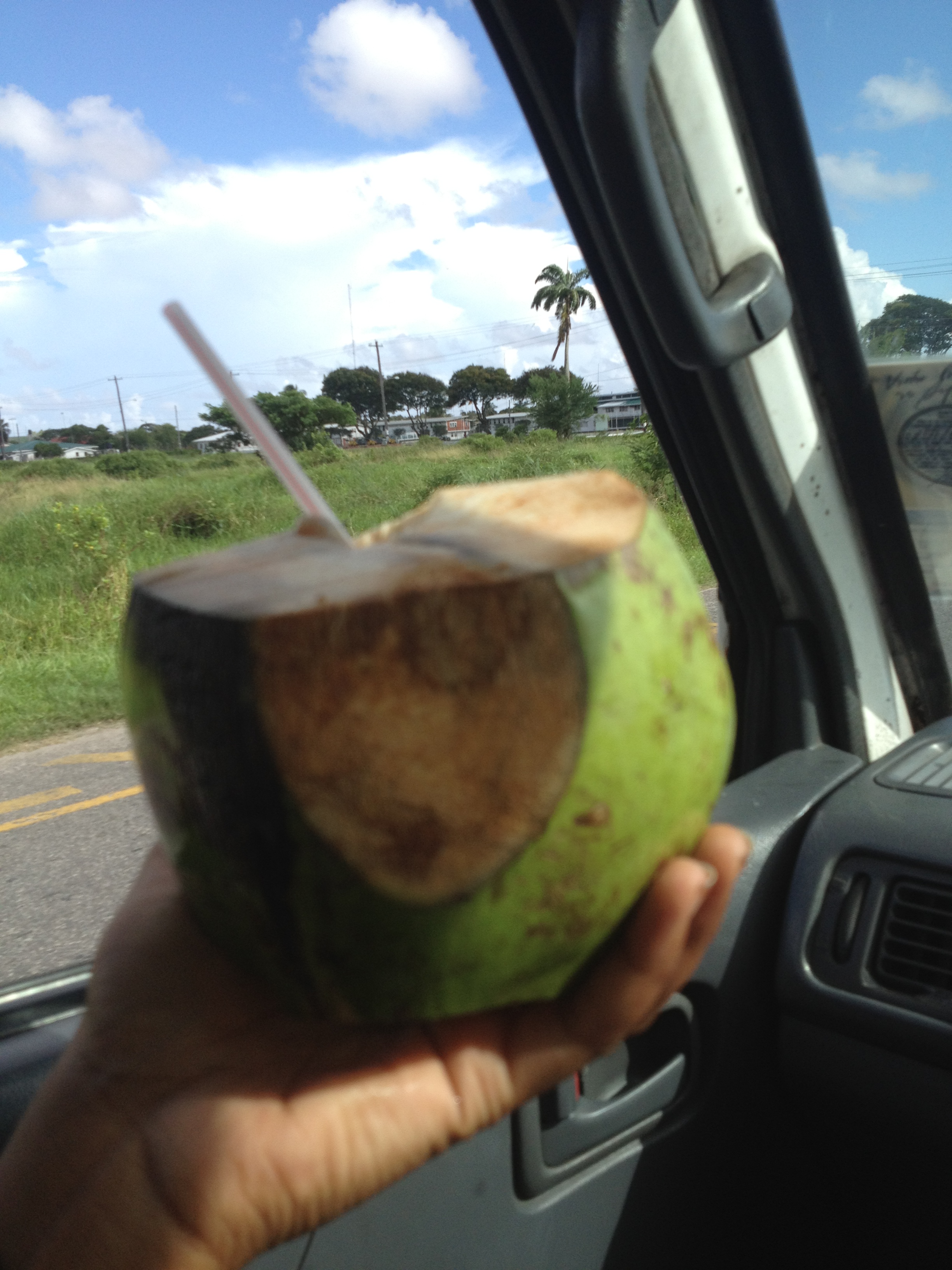
(coconut love pic)

Incidentally, Guyana produces some of the best coconut water!! Moreover, Guyanese neighbors & friends with coconut trees in their yards are hospitable and always willing to pick coconuts for you or even buy some coconut water from market or street vendors for anywhere between 120-140 Guyana dollars ( $0.60-$0.70 in US currency). When I told some of the Union village kids the price I pay for box coconut water in the US like (VitaCoco or Zico), they laughed pretty hard at the thought. 🙂

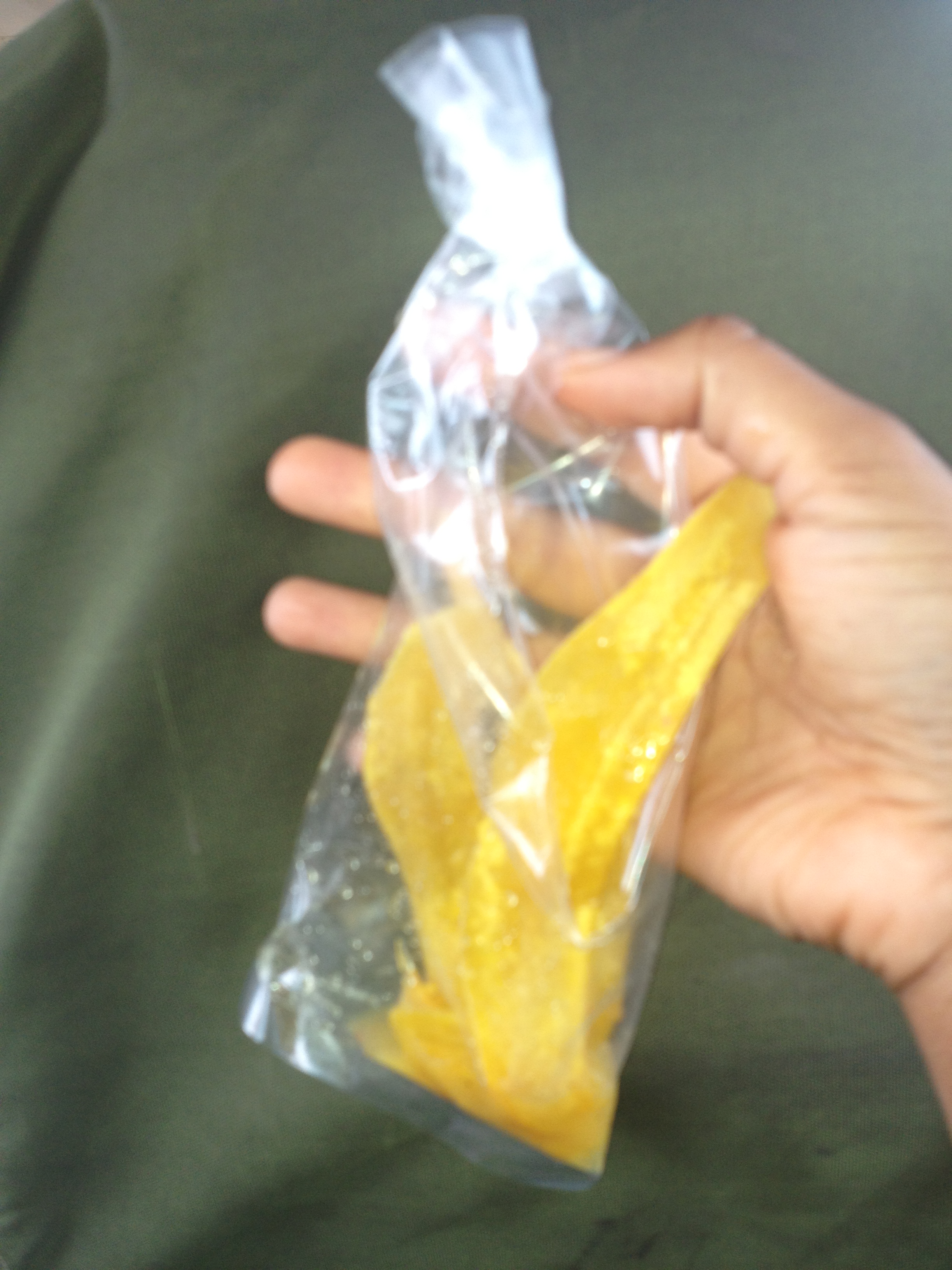
But, besides coconuts, many places will have trees growing cherries, pomegranate, guinep, oranges and -my all-time favorite Guyanese quick snack, PLANTAINS. For 100 Guyana Dollars (about $0.50 in US currency), foodies can enjoy the best fried plantain chips & sour which is a local condiment usually made of some combination of mango, pepper, and sugar. So yummy!!

(pic of DELICIOUS mango “sour” and plantain in a typical street vendor bag in Berbice)

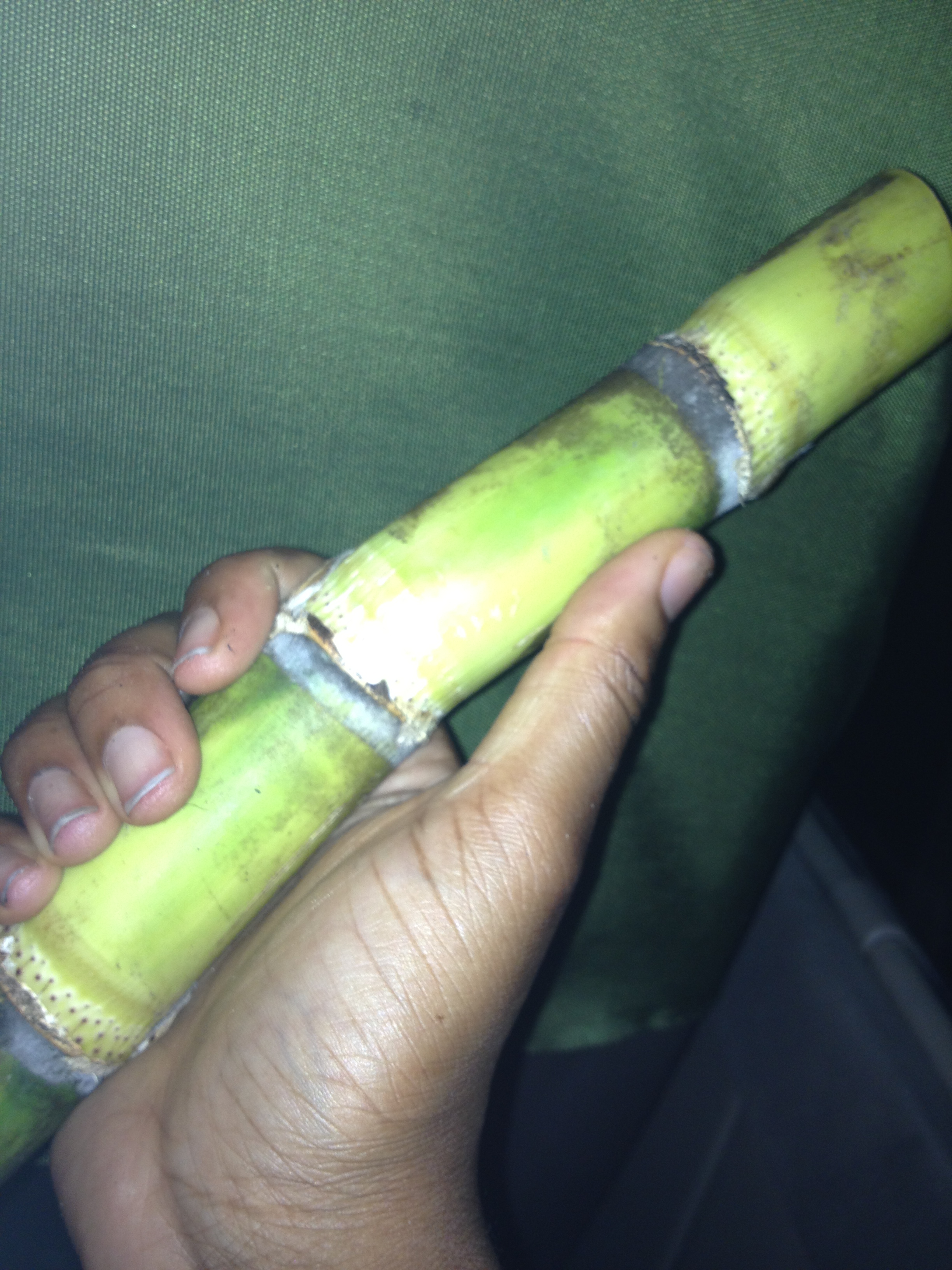
The only other snack that is more boast-worthy than plantain chips is sugar cane! In the markets, you can find folks selling peeled sugar cane stalks that people can chew on to suck out the delicious cane juice. Due to the ample spreads of unpopulated land, cane fields abound to the extent that Guyana is one of the best sugar producers in the world on the levels of both quality and quantity. Sugar is indeed one of the pillars of the Guyanese economy that affects every aspect of Guyana from the history to the culture.

(sugar cane in my hand pic)

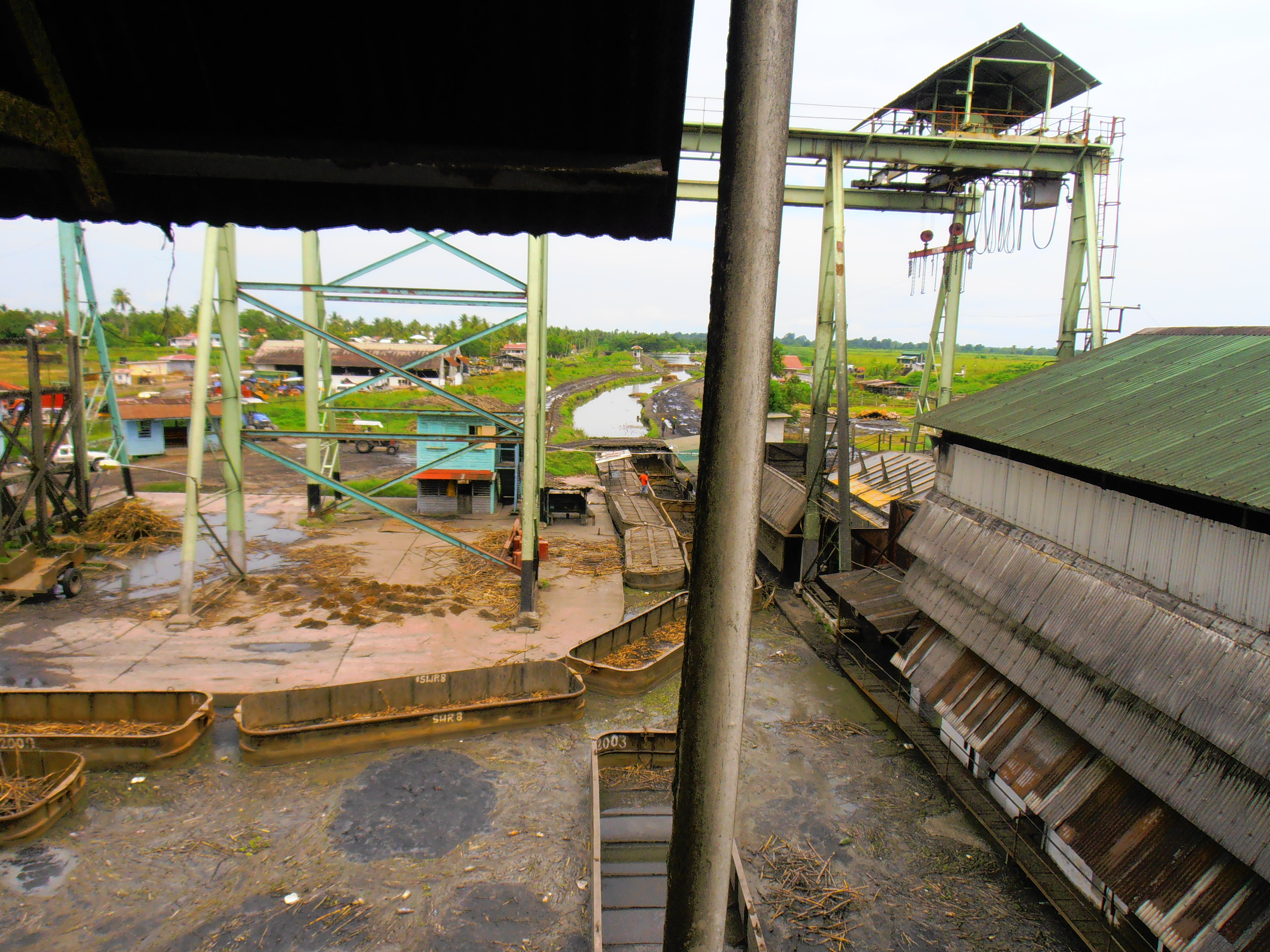
No pun intenteded, but since the sugar (cane) industry is so crucial to Guyana, it was a pretty sweet experience when I got the opportunity at the end of August to go with my father and his Guyana National Service group to the GuySuCo Sugar Cane Factory in Berbice to see the machinery and estate house and also meet with some factory workers and representatives of the Guyana Sugar Company.

(view from above)

The staff and crew at the factory were extremely gracious and spent lots of time educating us on life in the sugar industry and explaining their perspective of cane production in Guyana and its ramifications on the economy and lives of Guyanese people. As an added bonus, they also prepared an Indian feast for us at the estate house complete with all types of curries including curried fish  and curried “chunks” (the local name for a meat substitute that is popular throughout the West Indies and especially among Hindu people and vegetarians).

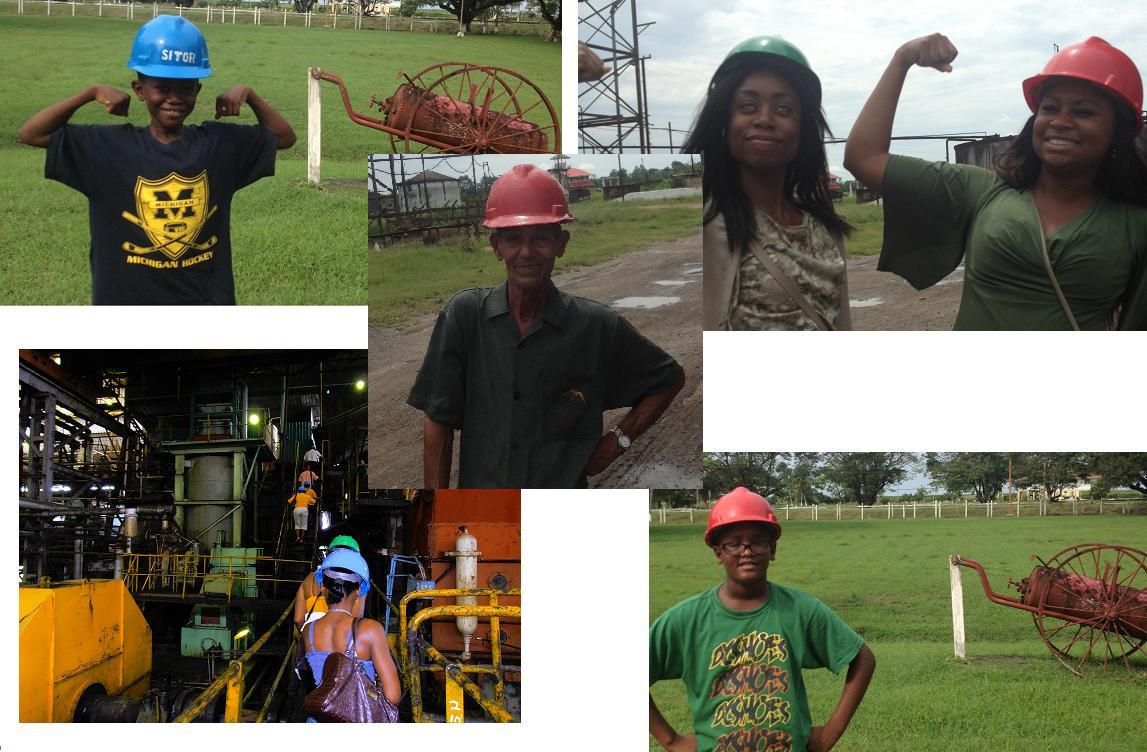
(hard hat montage … can you guess who the real sugar expert is?)

I learned a lot at the factory that helped me start to understand a little more about agriculture and working conditions for the labor force in Guyana; so, I hope more people appreciate where their sugar and food comes from. Besides sugar, Gold and music (particularly Soca Chutney) are other exports that some Guyanese people can get super proud of. In this “Cya Go No Way” video below, you’ll see both gold and  Soca Chutney as the artist Anil Bheem and his friends wear lots of gold earrings and chains while singing  the “rum song” genre that is so popular in Guyana:

(Anil Bheem)

Song title: Cya Go No Way

Yankee translation: Can’t Go Anywhere 🙂 youtube link as follows:

http://www.youtube.com/watch?v=VKaJJKNFwrQ

Last but certainly not least,

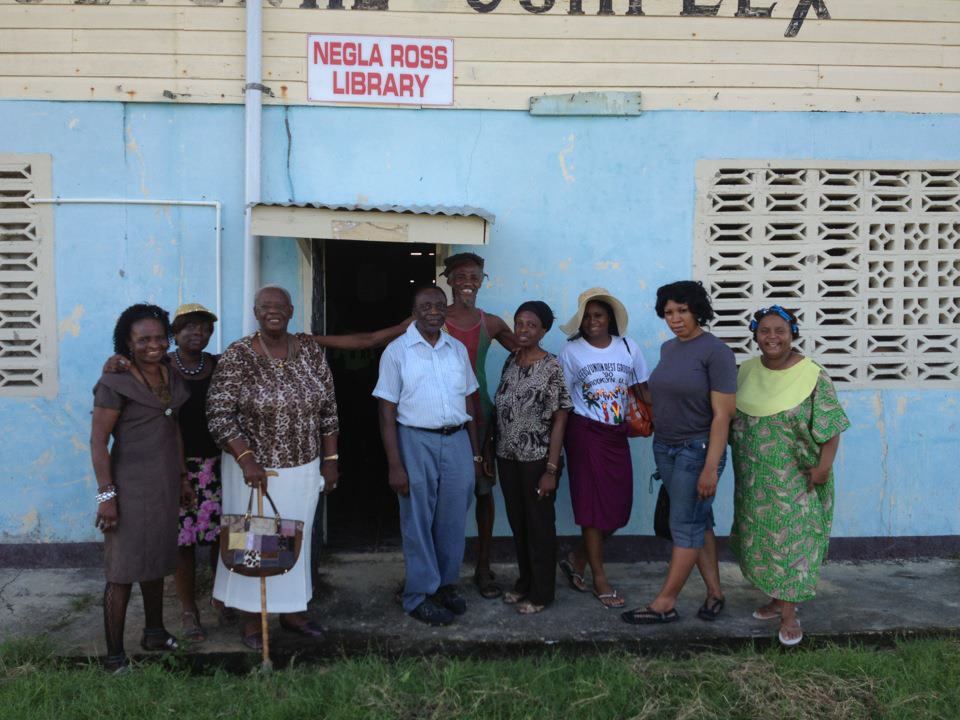
Guyana has a history of hard working people who sacrifice a lot for their families… For this reason and more, many people take a lot of pride in their family and are super thankful for their ancestors, elders and parents for the sacrifices that they made to make their lives a better place. I, too, have a lot of love and respect for my family and elders like my grandmother, Negla Ross. She died in the 70s but her legacy lives on since she served the people of  her village in awesome ways by teaching many children how to read and making clothes for those who needed them.

In the Union Village there is a present need for more literacy support and child-friendly spaces; so, the community members got together and created their very own neighborhood library in my grandmother’s name. I visited the library as well as community leaders and teachers like Waveney Dorsett this summer and so i’ll post more about the work there in the future. For now, I  feel extremely proud of the Union/53 Village community and its teachers and leaders for mobilizing to improve their own neighborhood.

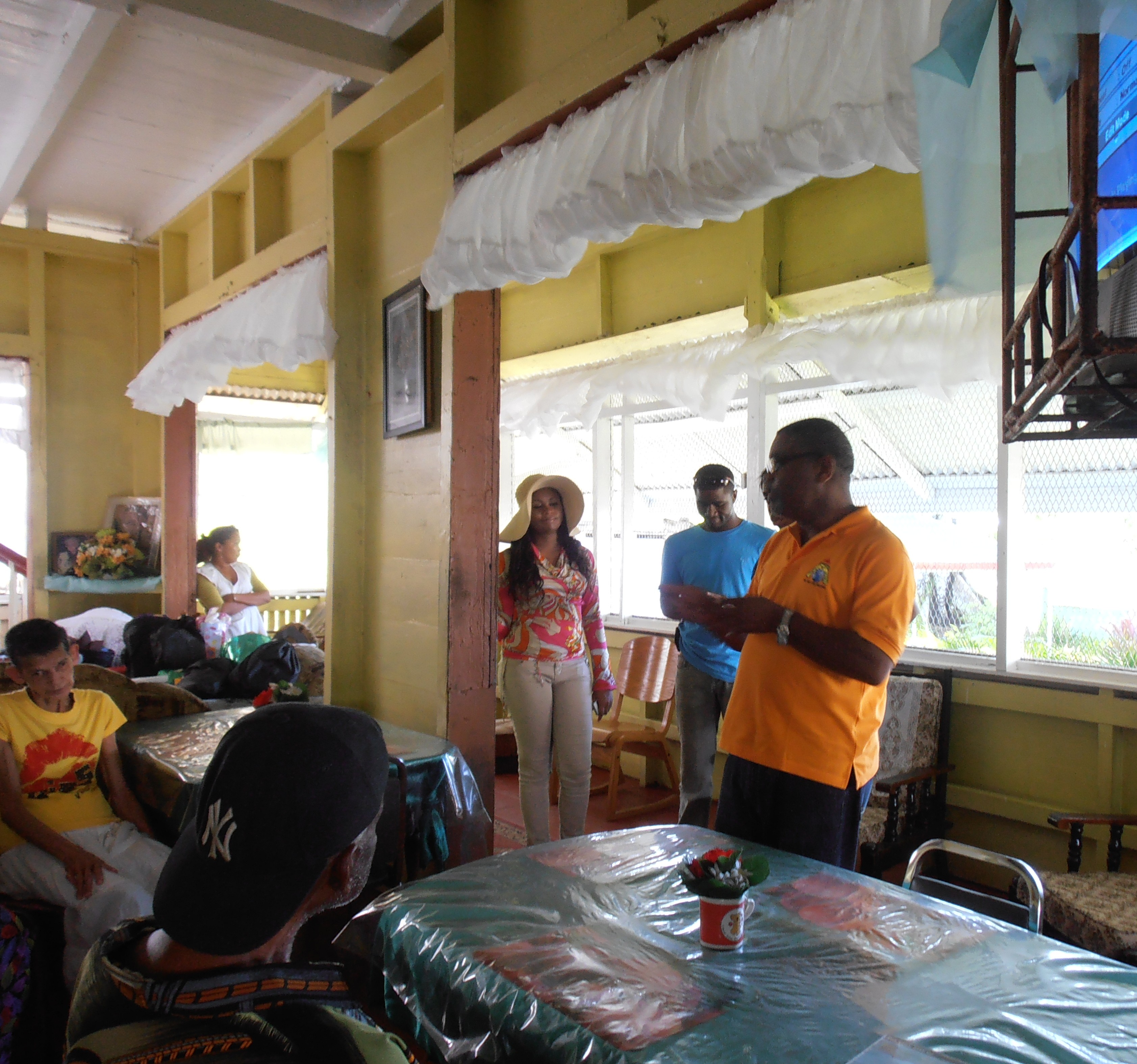
By extension, I also feel a lot of pride for the entire generation of  elders in groups like the Guyana National Service Association who take a lot of pride in Guyana and give back in major ways. Below is a pic of yet another summer 2012 GNS initiative for Guyanese elders that culminated in us spending a little time at the Archer House Senior Citizen’s Home. Below is a pic of my dad, my Guyanese brother Nickolai and I delivering love and appreciation gifts from GNS (Ex-Guyana National Service Association) for the elders there.

Archer House with Dad and Nickolai

(Archer House pic)

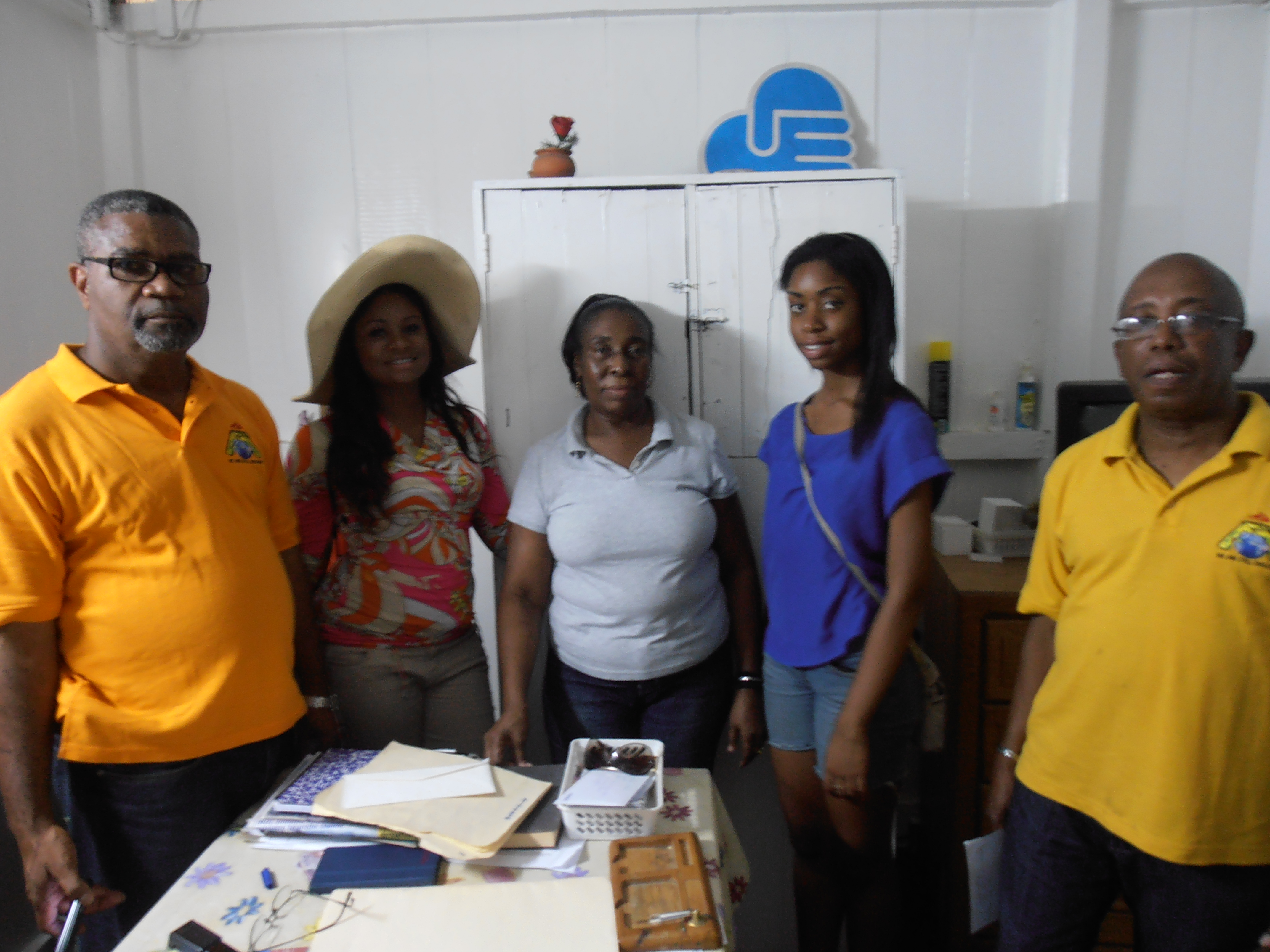
The last pic below is a group shot with the very center of the pic featuring the lovely matron of Archer House , Olive Williams, and two GNS team members on the end (the one next to me and my floppy hat being my father once again!) and my sister Glorie in blue. Until my next post, enjoy your own family ( and especially your elders) on Labor day weekend and wave your flag if you can!  Peace and respect! 🙂

(Olive Williams and fam)

“The time has come
For closing books; and long last looks must end
And as I leave,
I know that I am leaving my best friend
A friend who taught me right from wrong,
And weak from strong — that’s a lot to learn
What can I give you in return?” -Lyrics from the song “To Sir, With Love” performed by Lulu in 1967 and the GLEE cast in 2012

Ms. Parris reporting again from Guyana on the twin topics of ministry and culture. A lot of life-giving energy in Guyana is rooted in the cultural activities and spiritual pursuits of the people here. One cultural event that remains particularly uplifting to me (because of my own vocation as a Christian educator) was seeing E.R. Braithwaite here at the “To Sir, With Love” play performed at the Cultural Center and co-produced by National Library of Guyana in Georgetown on Wednesday August 22, 2012.

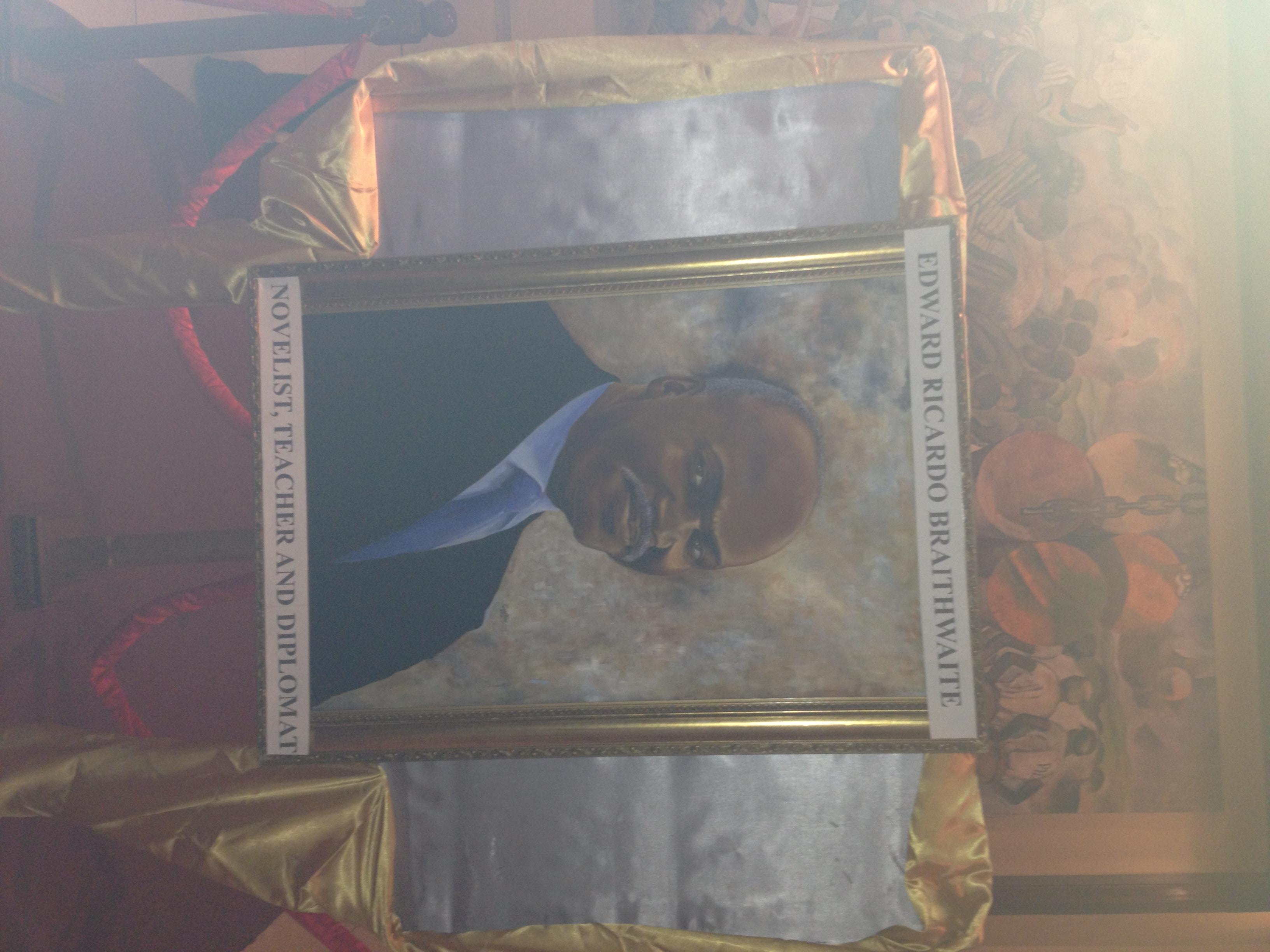
Painting of E.R. Braithwaite in the lobby of the Cultural Center where the “To Sir, With Love” play was performed.

E.R. Braithwaite is a legendary Guyanese novelist, educator, diplomat and scholar whose novel “To Sir, With Love” was adapted into a movie with the same name starring Sidney Poitier in 1967.

Book cover and DVD pic

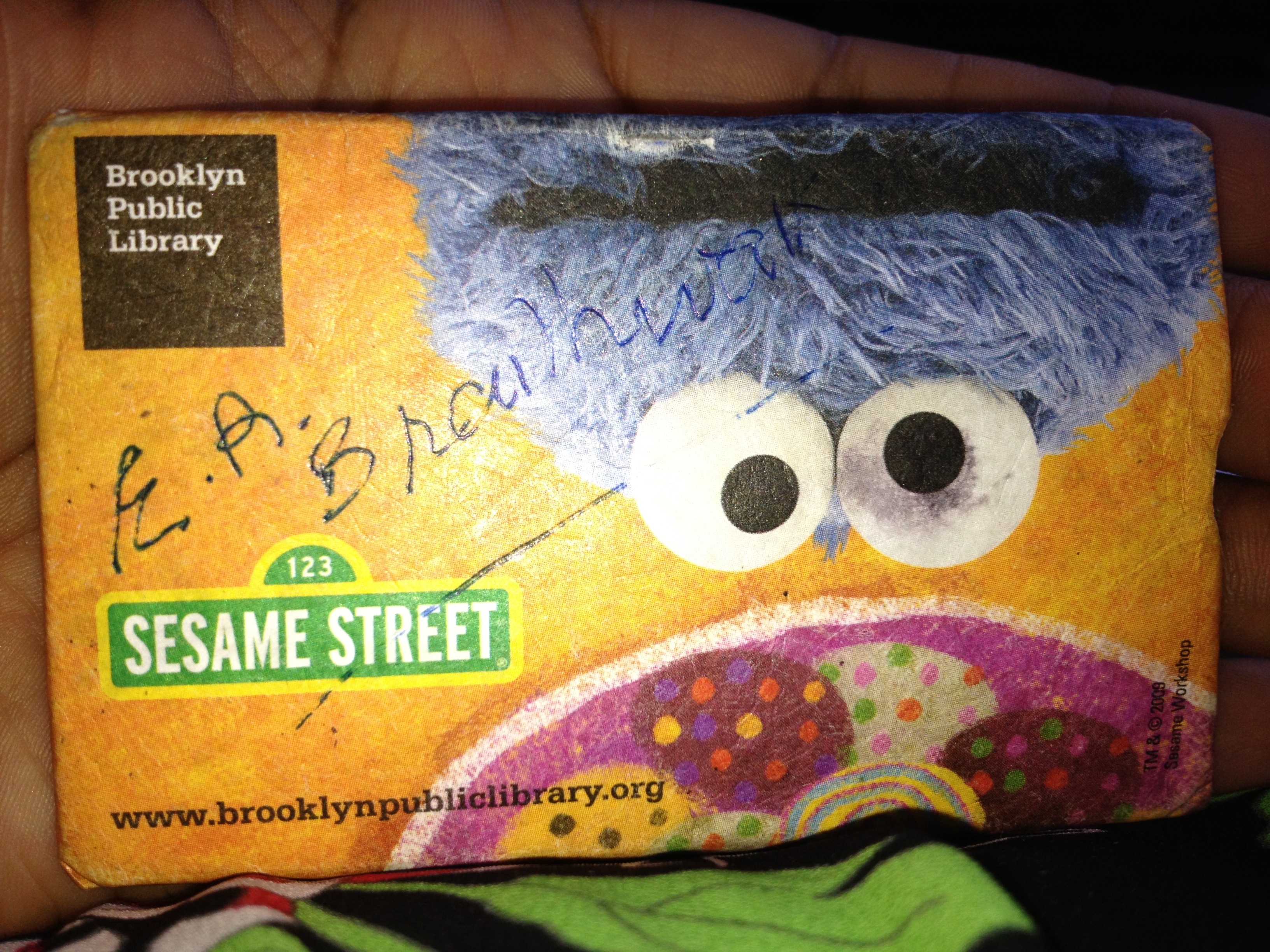
Both the book and film address themes concerning education, respect and race that are still relevant today, especially for new teachers who are negotiating classroom management styles (and specifically, the interplay of teacher influence with both teacher and student beliefs). Seeing the dramatic production of a Guyanese version of “To Sir, With Love” with a local cast and contemporary setting was a treat with the cherry on-top manifesting when E.R. Braithwaite signed my library card!

My library card signed by E.R. Braithwaite.

Such blessings like these have made the Cultural Center in Georgetown a very important if not sacred space in Guyanese history and community. There are many overtly religious-themed paintings in the space  hanging the lobby walls;  however, the cultural programming often showcases the vibrant spiritual life of the people in subtle ways. One recent example of this intersection of culture and spirituality is seen in the Miss Jamzone International 2012 pageant that I attended on Tuesday August 21, 2012.

2012 Miss Jamzone International Pageant ticket

Ticket stub for the 2012 Miss Jamzone International Pageant I attended at the culture center in Georgetown.

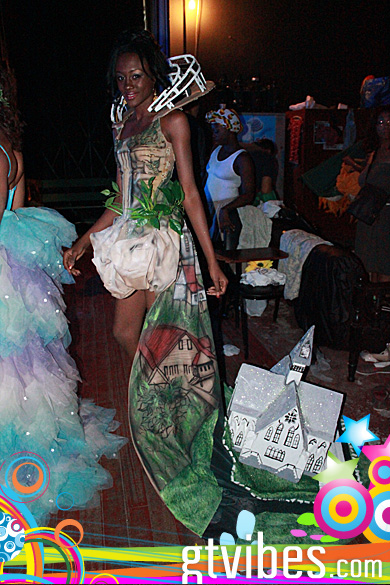
My ticket stub is the pic right above this text and right below you can see that for the cultural wear category, Miss Guyana donned a powerful dress containing a miniature replica of the St. George’s Cathedral on the train of her costume.

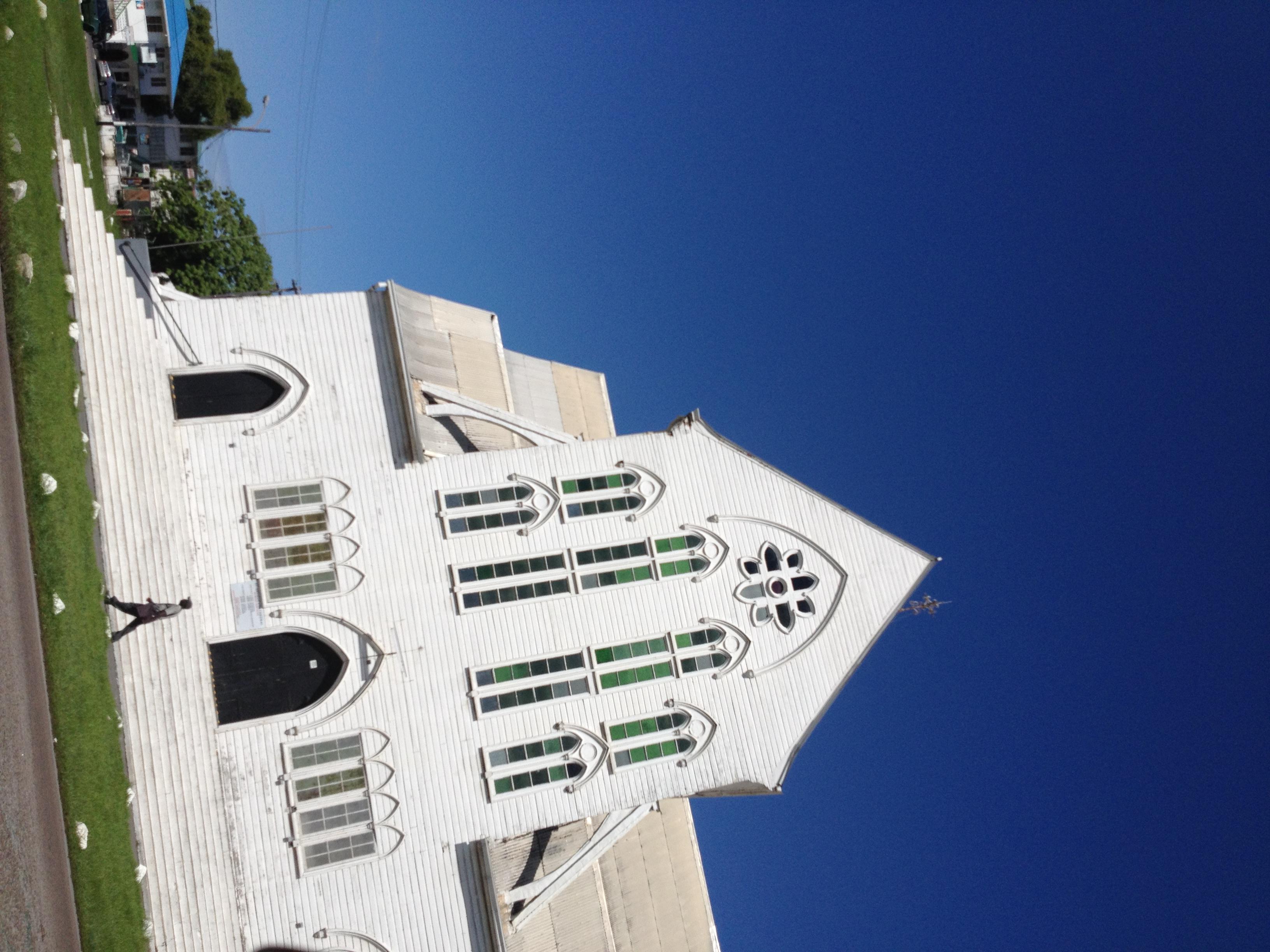
St. George’s Cathedral in Guyana is a critical part of Guyanese history for spiritual and cultural reasons as an Anglican church  that was once the tallest wooden structure in the world (read more about the full history here: http://www.stgeorges.org.gy/history.html). The faithful; can worship inside while tourists may visit Guyana to snap photos like these from my personal collection the outside:

A view of st. george's from my iphone

There are many wonderful places of worship here such as St. George’s Cathedral and similarly there are many Christians here and abroad who are led by God to partner in wonderful ways with the people of Guyana. I was blessed to have team members in the Ex-Guyana National Service Association of North America  and also New Haven, CT at The Church of Redeemer and Yale Divinity School who traveled with me to Guyana or sent items like  books as well as prayers and great advice about partnerships and projects here.

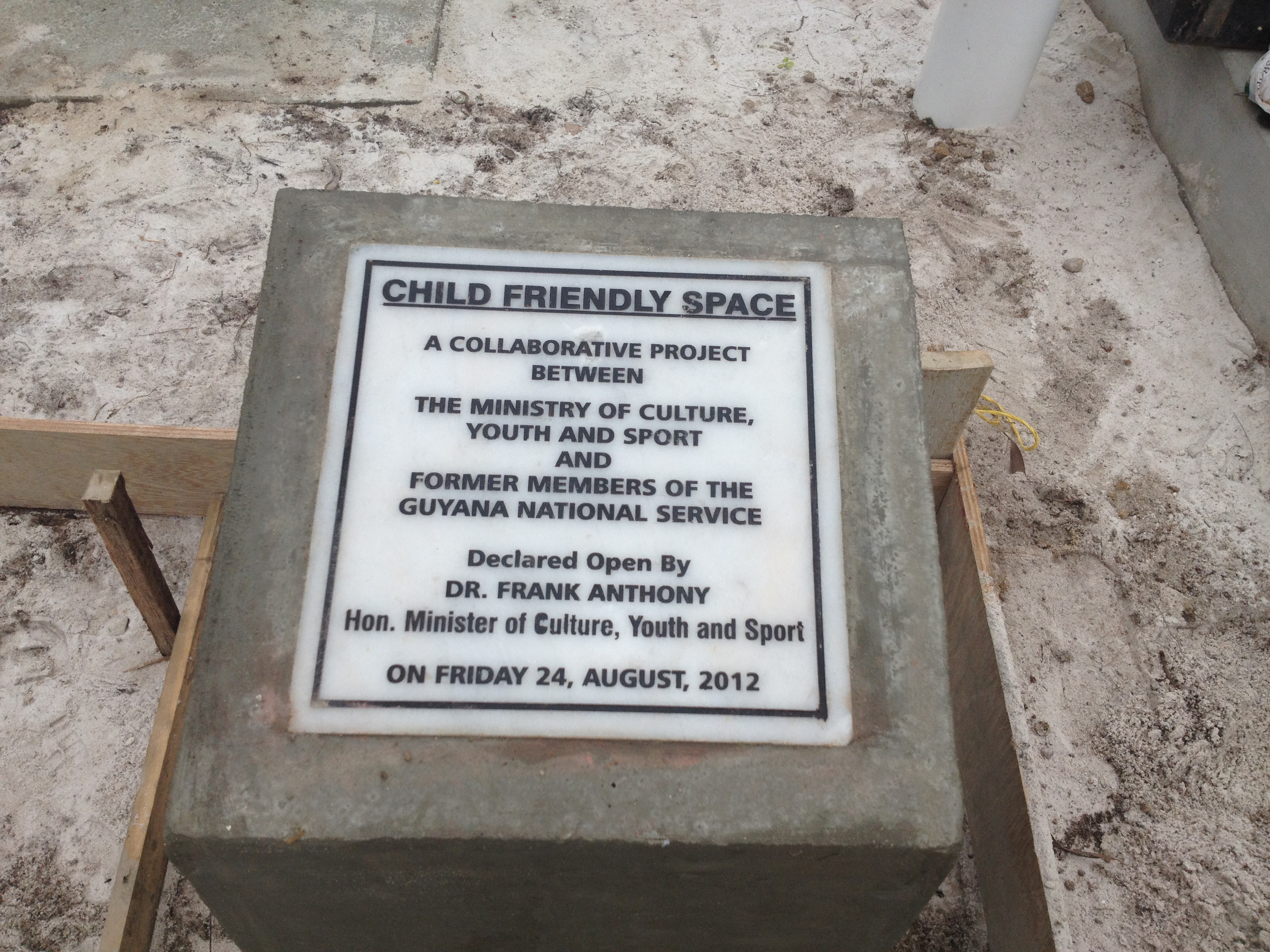
Carifesta sports complex  corner stone

Cornerstone for the new playground at the Carifesta Sports Complex that was built this summer

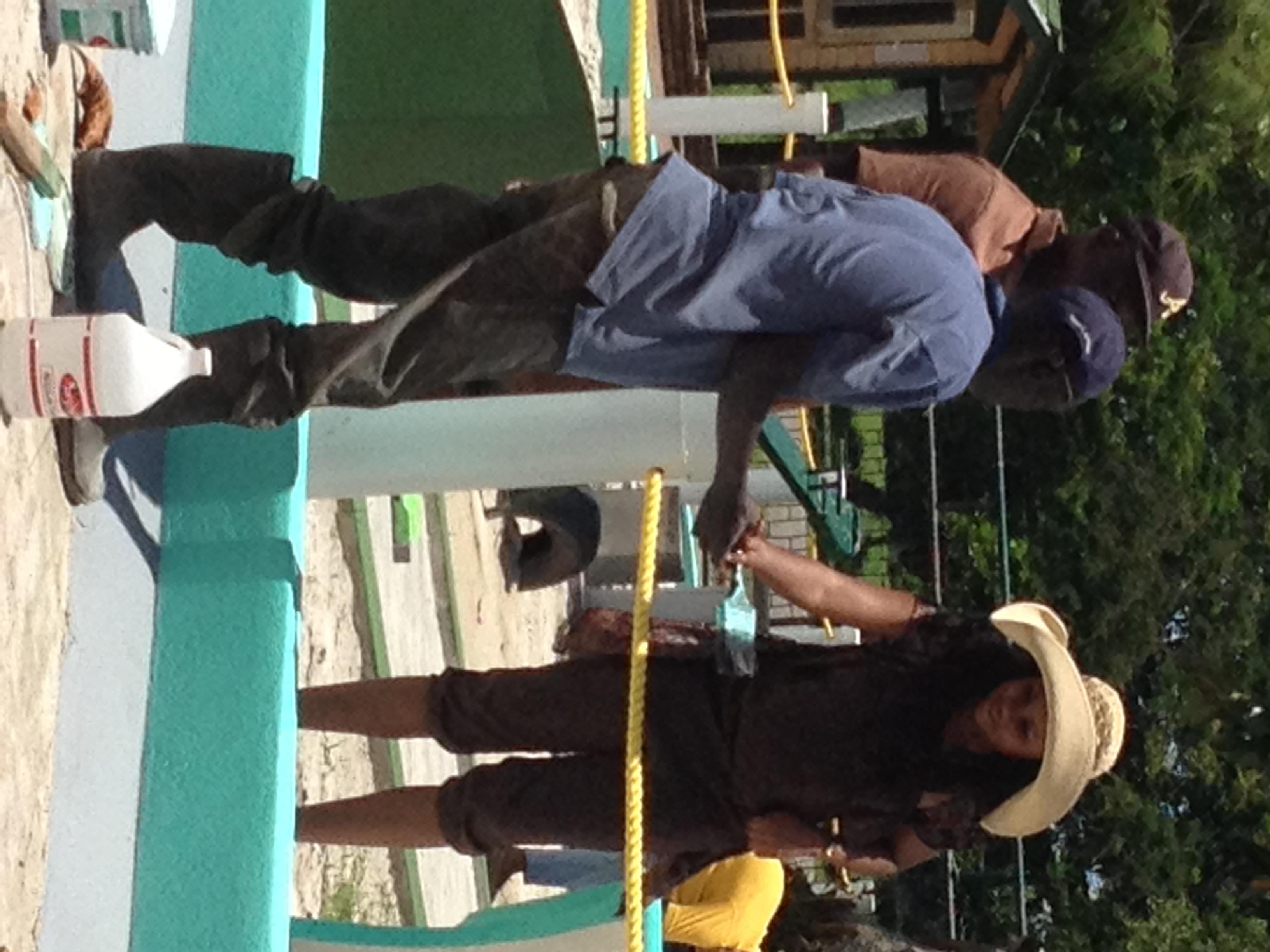
One of the projects completed this summer in partnership with the Guyanese Ministry of Culture, Youth and Sport; Dr. Frank Anthony and the team members who were former members of the Guyana National Service Association was the construction of a playground on the Carifesta Sports Complex. These efforts are specifically youth-oriented so that the children of Guyana have another child friendly space in the Kitty area where the complex is located.  Below are pics of of us painting and working but the official opening of the playground will be a few short hours from the time that I write this post on Friday August 24, 2012.

palygorund painting

Team members painting the playground and teaching me cool techniques.

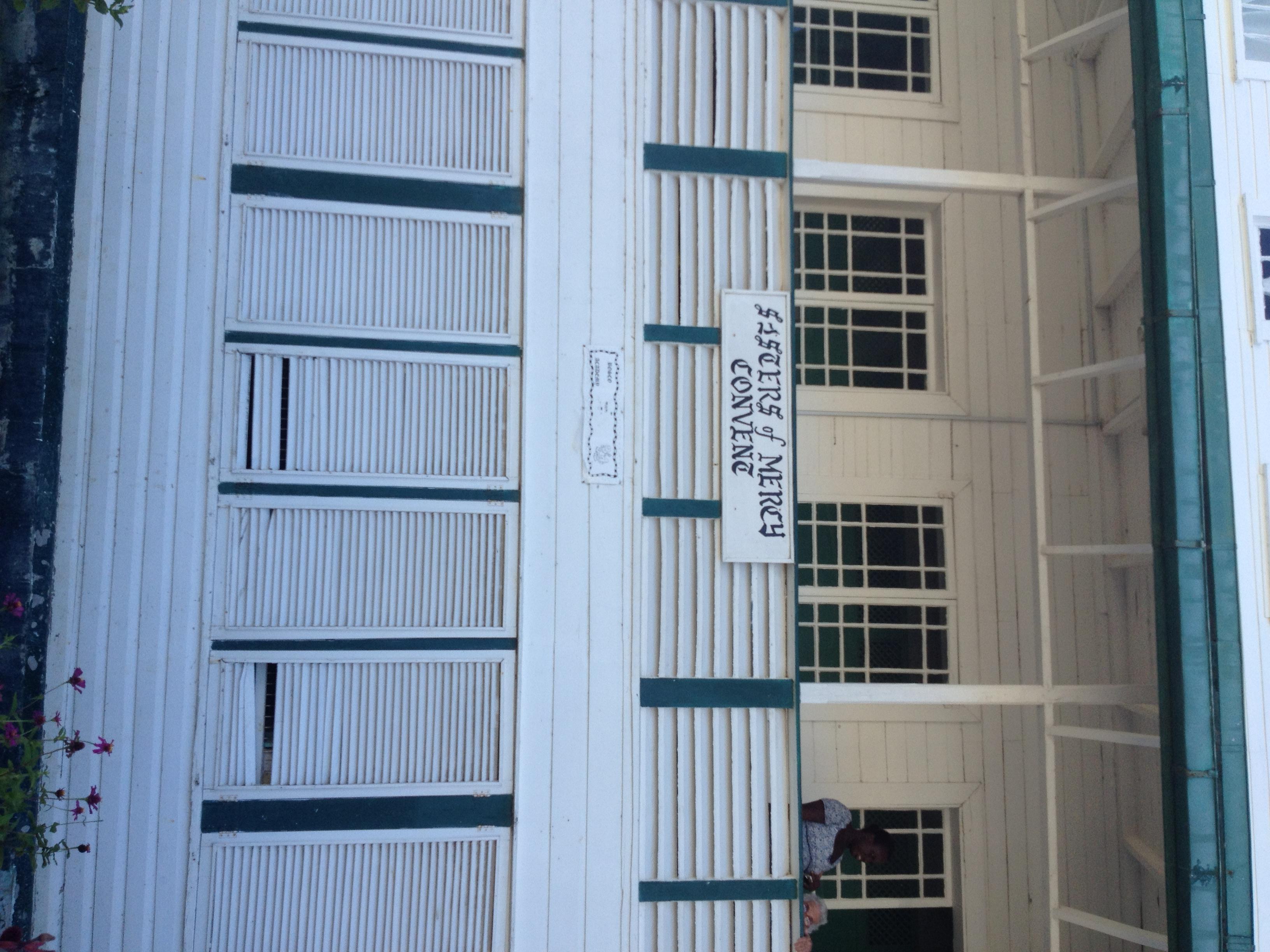
The team members here are driven by a deep faith and love for Guyana so another one of the major projects this summer was to partner with the Sisters of Mercy Convent and spend time with the boys of the St. John Bosco Boys Orphanage as well as the St. Ann’s Orphanage for girls with donated clothes and timely school supplies for the upcoming academic year. A picture of the convent is below the following description of the St. John Bosco Boys orphanage found on the site http://bosco_orphanage.tripod.com/history.htm:

Founded in 1831 in Dublin, Ireland, by an heiress, Catherine McAuley, the MercyOrde [Sisters of Mercy]soon became the “fire-brigade” of the Church rushing in to serve, wnerever needed, “the dispossessed, the poor, sick, uneducated and all those who in any way were wounded by contemporary society”. Among the characteristic works undertaken by the Sisters of Mercy stress was laid on the education of the young, the care of the sick and the care of girls, ~men, the aged, and orphans. Hence the Sisters of Mercy could hardly refuse the request of Bishop T. Galton to look after Fr. Casati’s boys, and in 1902 the Orphanage was place under the care of Sr. Mary Joseph McLaughlin and Sr. M. Columba McLaughlin… The word “Orphanage” in regard to St. John’s is probably a misnomer. Fr. Casati’s original idea was to get the boys off the streets-suggesting they were “homeless” but not necessarily orphans in the strict sense of the word. Today the accent is on the care of “poor, neglected boys”. Sociological study made a few years ago by Rosaliene Fung indicated that the majority of boys were not orphans but were from families where then had been a general breakdown of the internal environment-in short, from broken homes-indeed a microcosm of society in Guyana. Obviously, as was pointed out in this study, and from our continuous observation of the boys within our care, the boys come with deep scars through badly divided homes, severe neglect, actual abandonment and sheer downright abuse Just recently a five year old was brought to the Orphanage with such scares. He was miserable and aggressive with distrust. Yet it did not take him long  to realise that he was loved and wanted and this aggressive attitude is fast disappearing.

The only criterion for accepting a boy in the Orphanage is NEED. Boys between the ages of 4 -14 of every race, colour and creed are taken in.  It was felt that to contribute to their psychological needs there should be a separate home where boys between the ages of 11 and 15 or 16 could be taught a trade and trained preferably by Brothers -a vision originally projected by Fr. Casati. In the 1950’s and 1960’s this was also the vision of Dr. J.A. Gomes who, together with other members of the S.V.P., worked towards this goal. However, for a number of reasons, mostly financial, this vision never materialized. The compromise was the opening of the David Rose Boys’ Hostel in Princes Street which gives accommodation to the boys of St. John’s when they leave the Orphanage at 14.”

My humble iphone snapshot of the Sisters of Mercy Convent where the St John Bosco Boy’s orphanage is located.

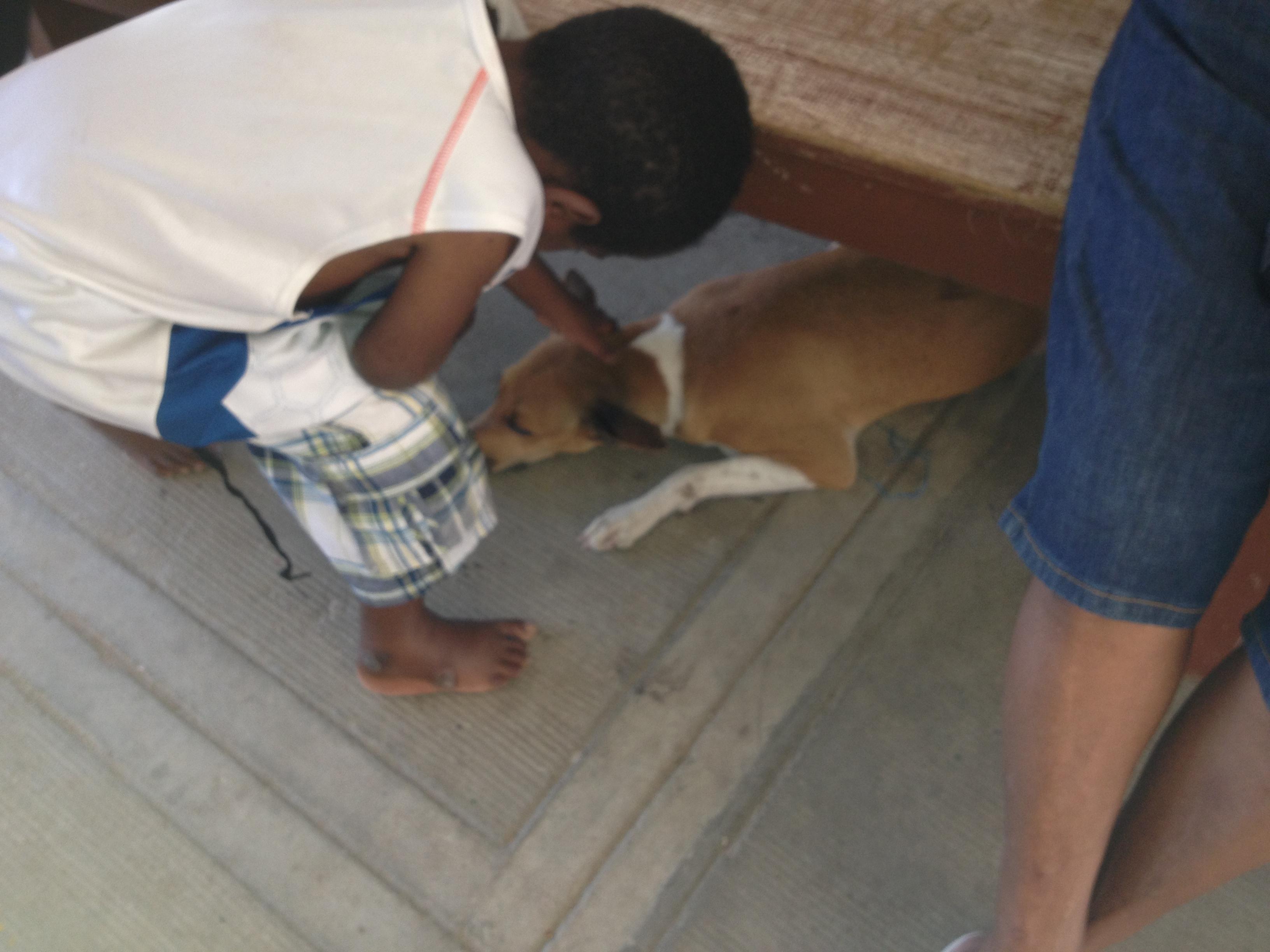
The boys that we visited were really inspiring and they specifically requested a lesson from me on how to do the American dance known as the “Jerk” after we played a game of “Simon Says” and did the “Chicken Dance.”  But without a doubt, the most smiles and positive feelings were related to Becky, the resident dog.  A picture of Becky and her friends is below:

Becky & friends! 🙂

The positivity of the Sisters of Mercy and their boys shows the resilience of the human spirit in atmospheres of love and care.

There’s still a lot more to report but until next time please keep praying for Guyana!

“One people, One nation, One destiny” -The motto of Guyana

Ms. Parris reporting and this entry marks my first official internet post from the land of my heritage and heart: Guyana. I’ll add more content/reflections when I’m back stateside in the good ol’ U.S.A., but for now please enjoy these pics and brief updates about the events and projects that are going on of late.

The Beginning Days

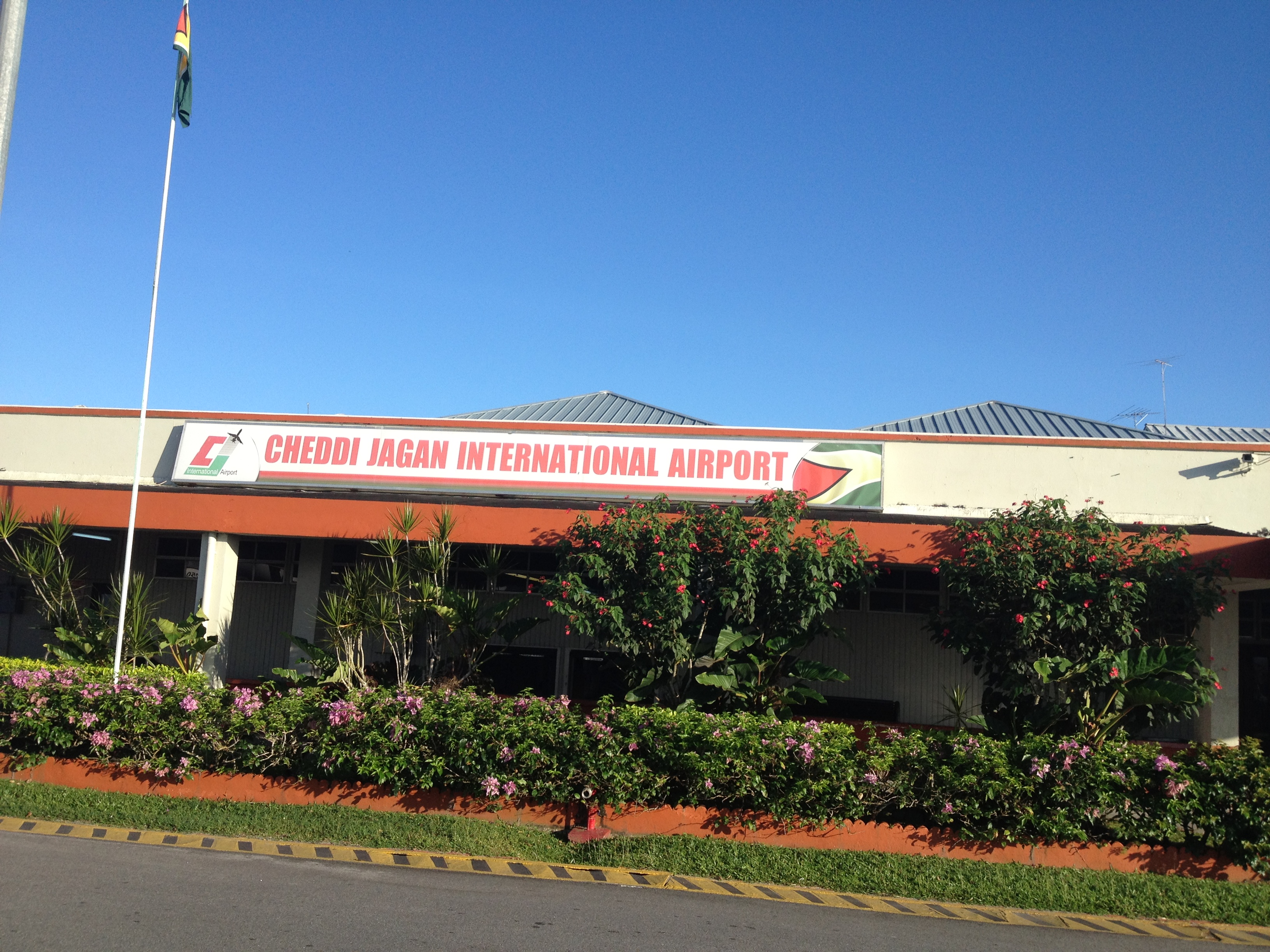
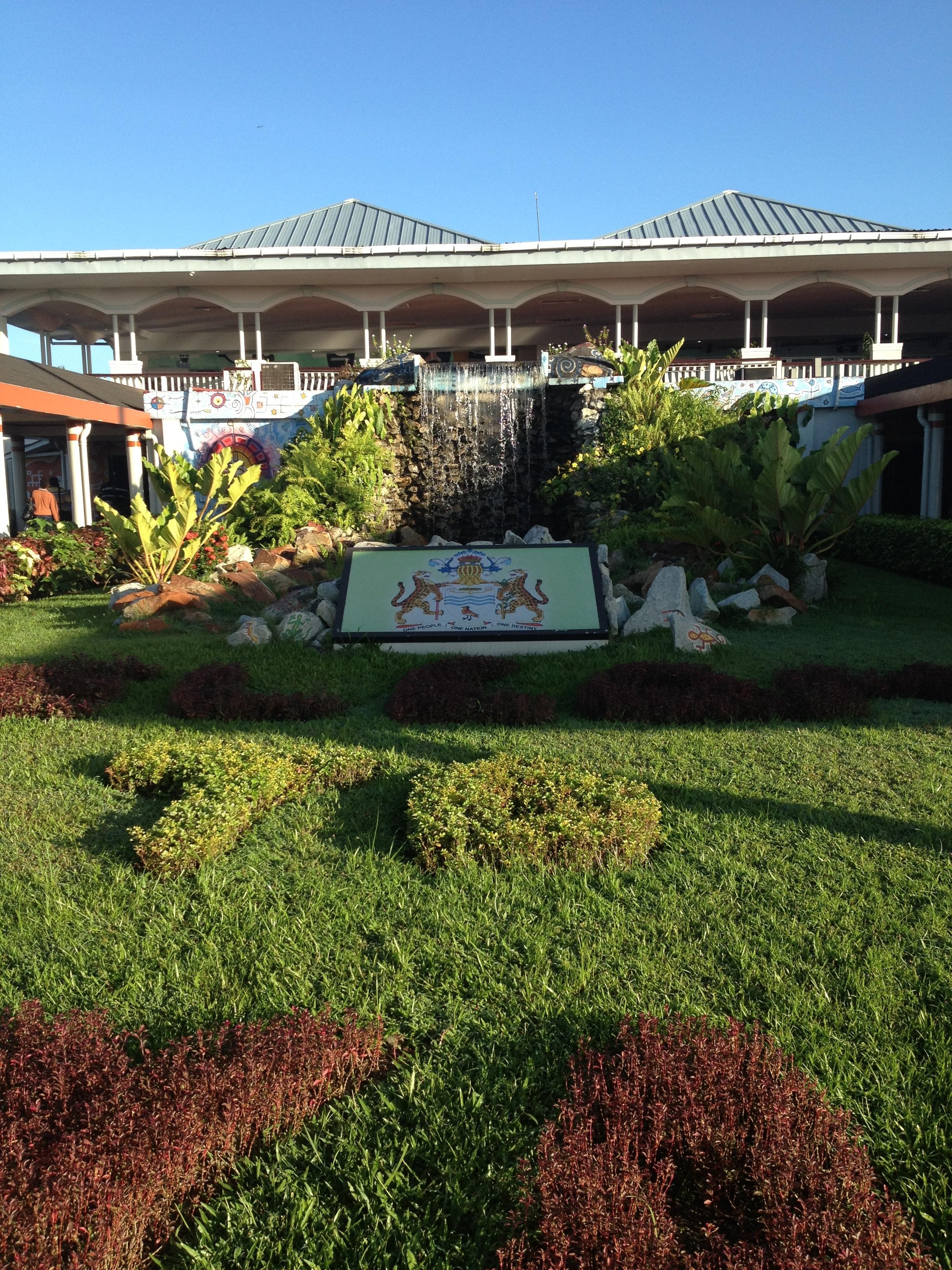
This pic above showcases the Guyanese Coat of Arms and waterfall greeting travelers at the Cheddi Jagan International airport. Such scenes of  the quiet dignity and heritage of Guyana are fortunately commonplace.

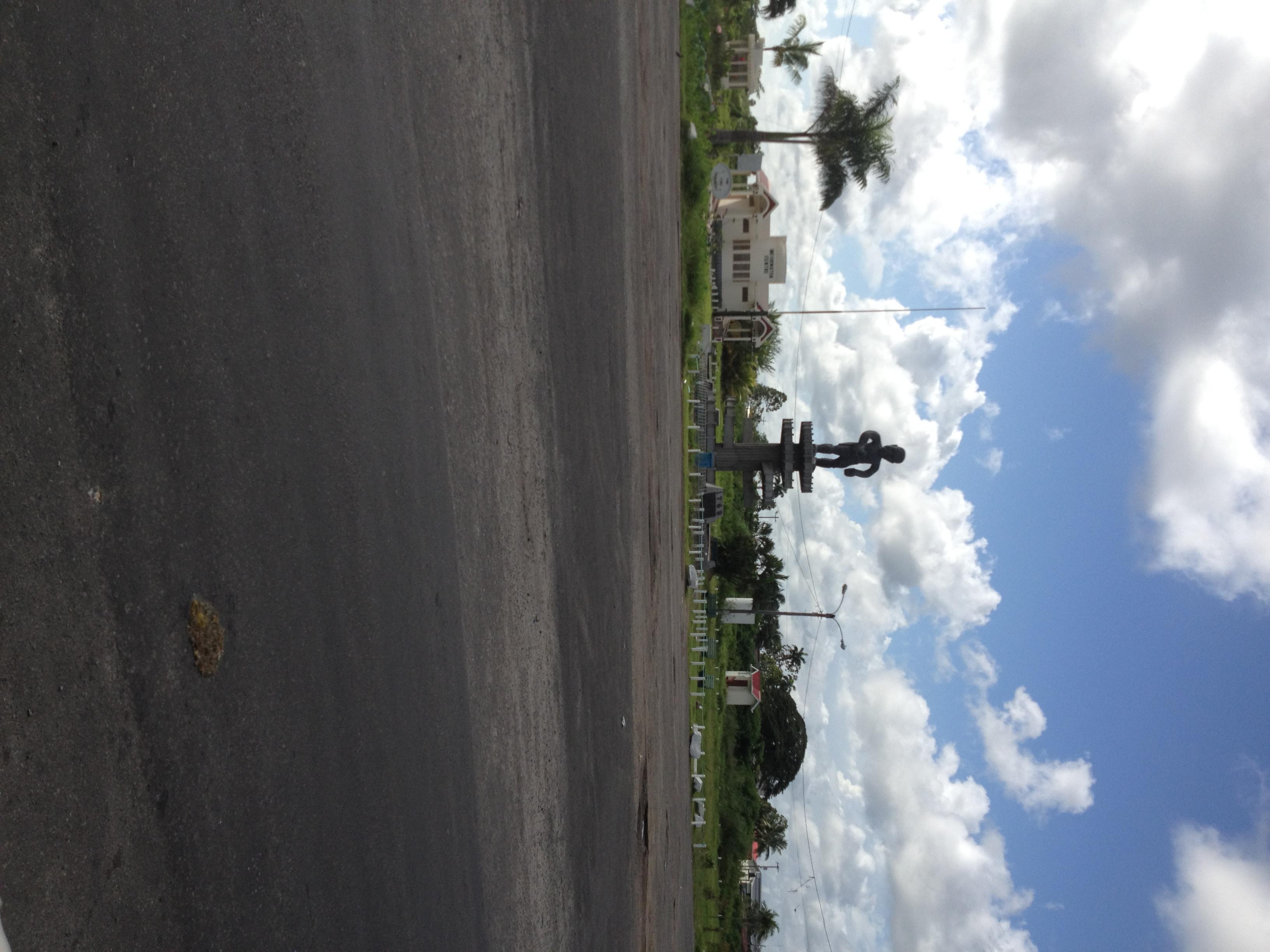
I pass this statue of  the “1763 Monument” often to get to and from where I first stayed in the neighborhood called Kitty. In 1763, “Cuffy” became a national hero for leading the people of Berbice in a fight for freedom from slavery and inspired generations of social justice seekers in Guyana.

Here is a bonus close-up pic of the “1763 Monument.” To this day there is great admiration of the strength and power of freedom-fighting  in Guyana dating back to the colonial era with Cuffy’s Berbice slave uprising.

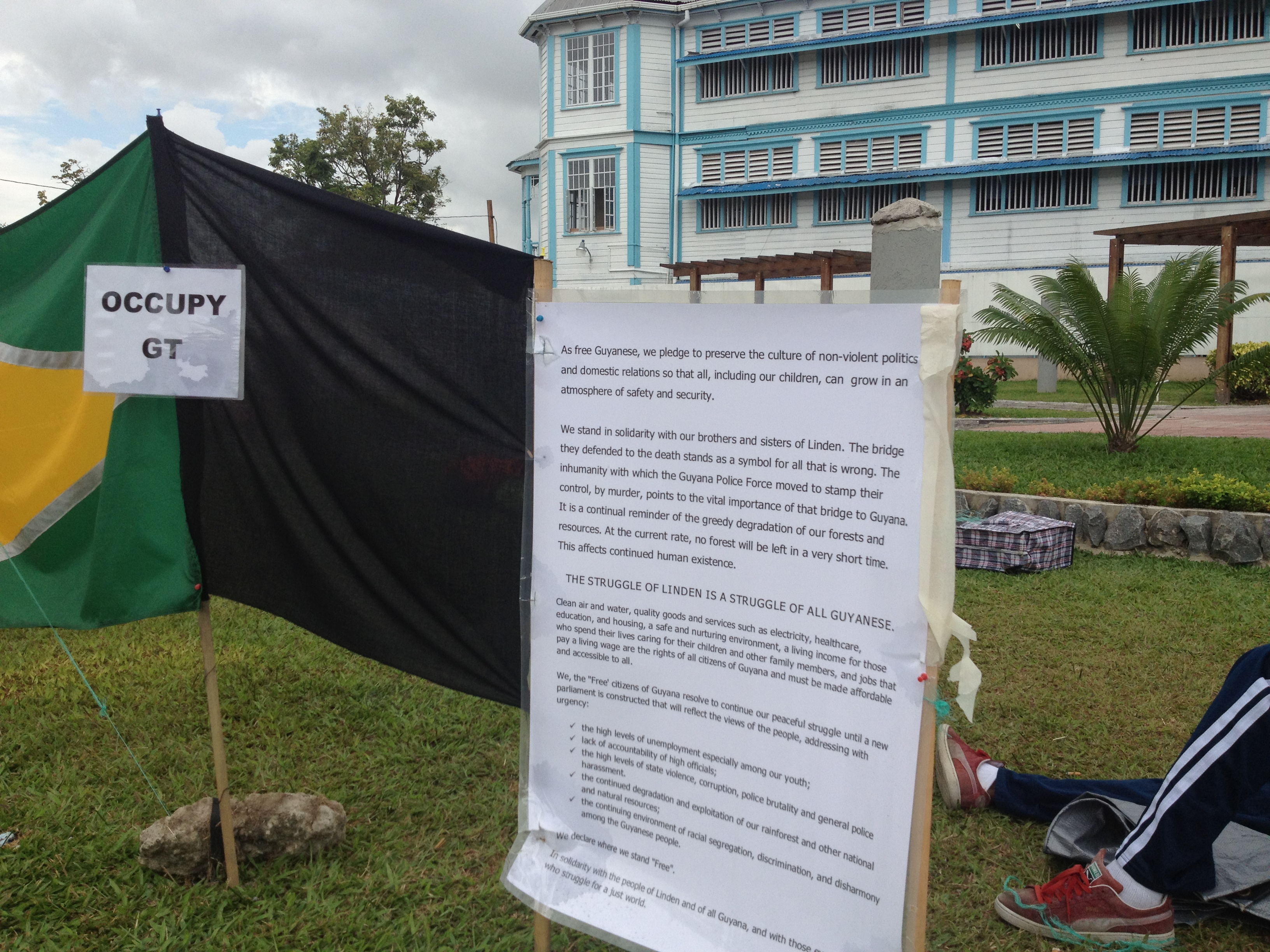
Cuffy’s legacy certainly still lives on today and this “OCCUPY GT” pic is just one example of that same spirit of freedom. The sign is not only a Guyanese statement of solidarity with the occupy movement around the world; but most importantly, it is a reaction related to the recent Linden Uprisings that began in July of 2012 and reached a climax during my journey here. There were protests and a struggle to demand economic justice in the low-income Linden neighborhoods which resulted in the loss of life and the blockade of a crucial bridge. In addition to this sign, there were also protestors standing in solidarity with the Linden mothers in front of Guyana’s parliament building as negotiations and compromises are starting to be navigated by parties on both sides of the struggle.

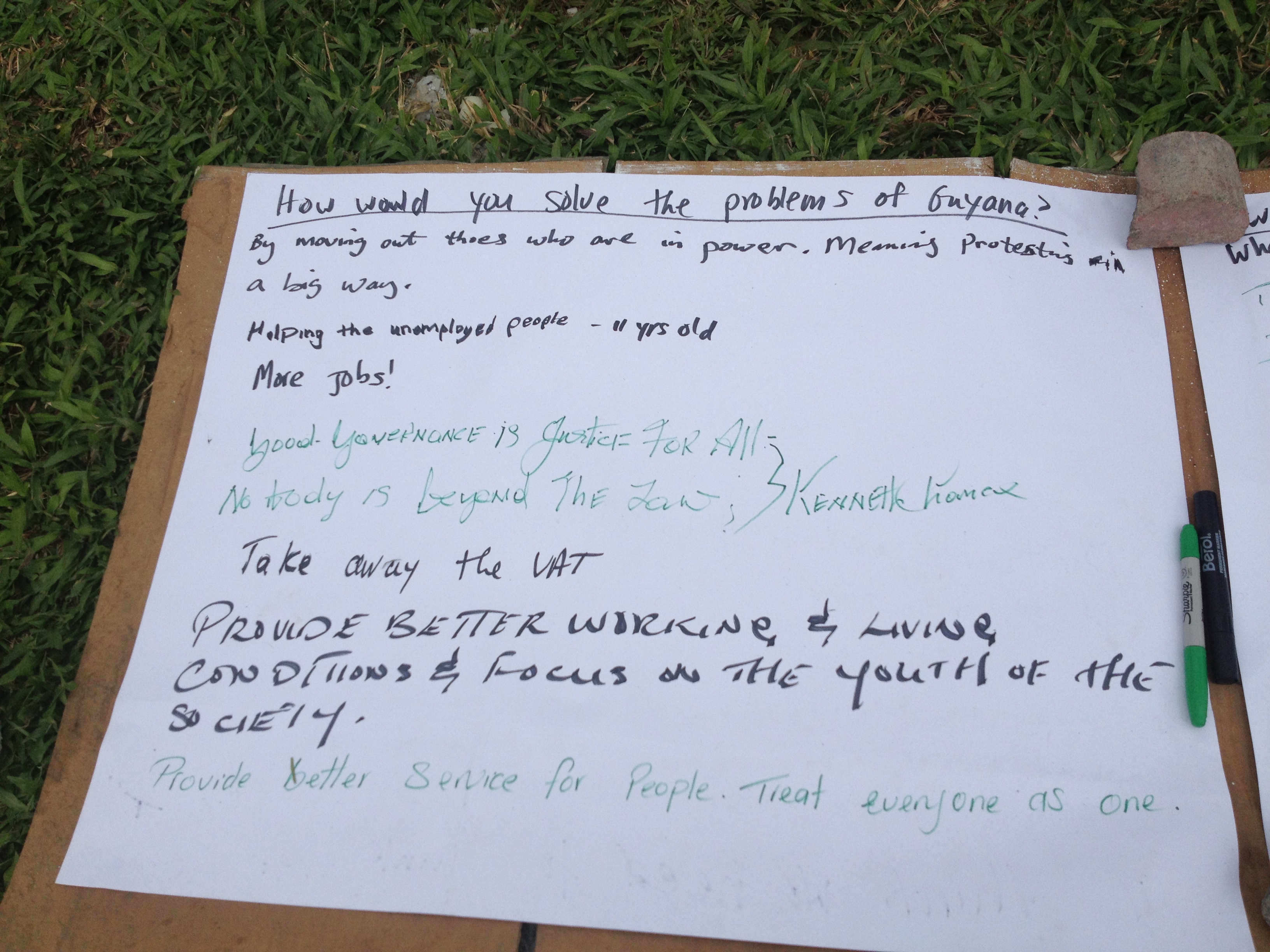
Likewise, there was also this sign in front of parliament which served as a make-shift forum for citizens to express their  point on view on how to “solve the problems of Guyana.” There is truly a strong willingness to have dialogue and move forward with progressive action to improve Guyana so such signs and even Guyanese  TV shows like “Voice of the People” are really inspiring.

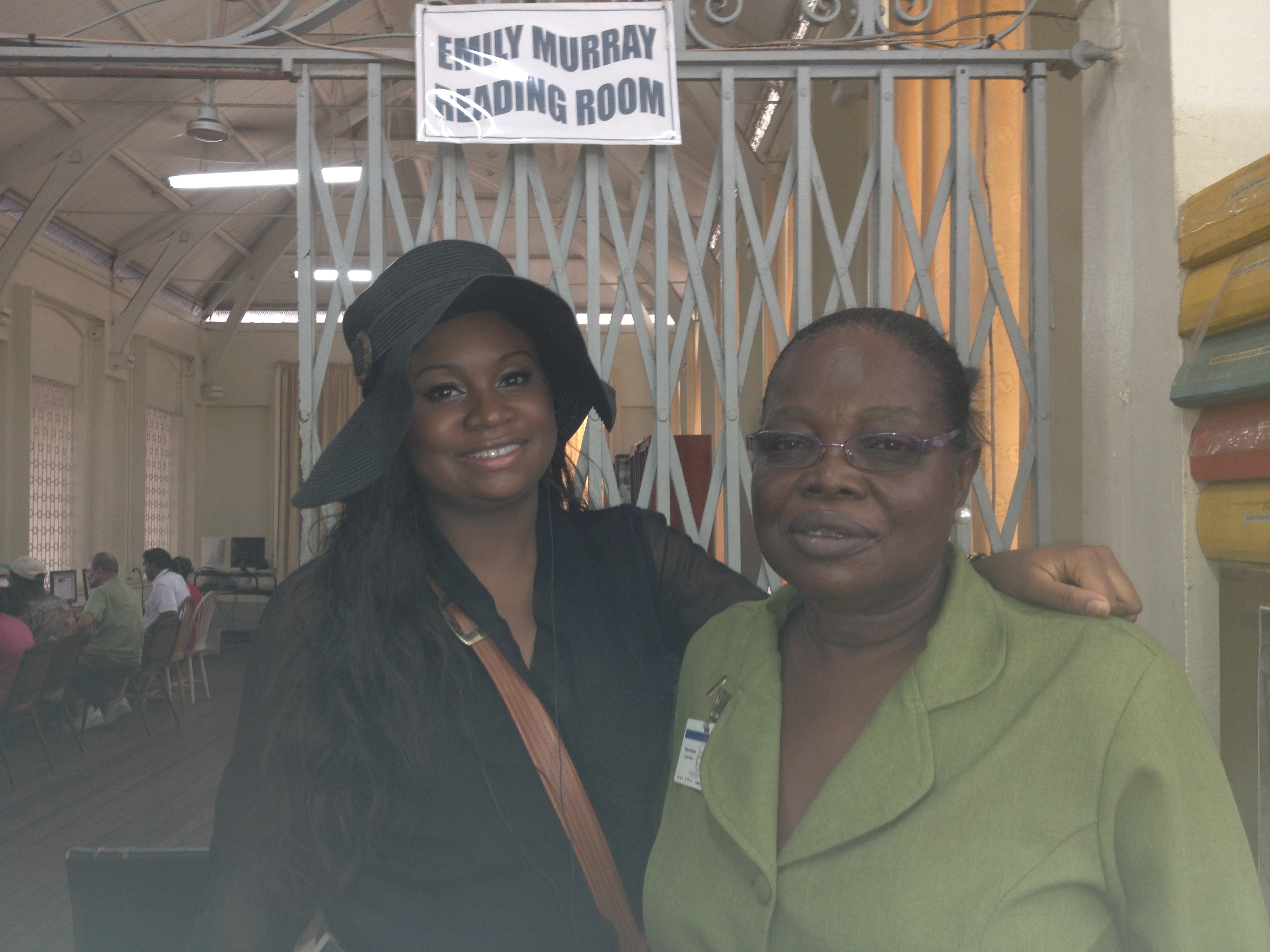
Finally, since I truly believe that power is in knowledge and relationships, this last pic for the day is one of me doing some research with the help of one of my family/partners in Guyana inside the National Library in Georgetown.

See you later for more updates and thanks so much for your attention, time and/or support! 🙂